 One time Donation
 Events
 Recurring Gift
 Employer Gift Matching
 Stocks & DAF
 Endowment
 Justice Circle
 (Raleigh, NC – December 10, 2025) It has been more than 160 days since North Carolina had a state budget. On November 19, the North Carolina Senate Democratic Caucus held “The Real-World Impact of Failing to Pass a State Budget,” a public hearing to better understand the growing consequences of the budget impasse.
As journalists, supporters, and NC Justice Center staff listened, nine North Carolinians stood at the podium, providing powerful testimonies about how they and those they serve are affected by lawmakers’ failure to pass a budget. Speakers described the profound harm communities across the state are experiencing because of the soaring costs of living and healthcare expenses, as well as the diminishing access to education and behavioral health services.
Some audience members were moved to tears as testimonies revealed the intense cruelty of withholding necessary funds while our neighbors most in need continue to face dwindling resources.
As a result of NC lawmakers’ refusal to act, more working families are relying on food banks for support, and nonprofits are left grappling with higher costs and a higher demand for services— a demand that they will soon be unable to meet.
More providers could stop taking Medicaid patients, leaving more North Carolinians with a lack of treatment options and delays in care. Meanwhile, budget cuts for facilities that support individuals with intellectual or developmental (I/DD) disabilities, or those with complex needs, have already been struggling to provide consistent support.
Many families have been waiting years to gain access to the NC Medicaid Innovations waiver, which covers a wide range of services and programs for children and adults with I/DD. They’re also unable to access the Community Alternatives Program for Children (CAP-C) and 1915(i) services, which provide in-home support, job coaching, and assistive technology and supplies.
Lives Depend on Medicaid Funding
With North Carolina’s Medicaid program still not fully funded, the quality of life could change drastically for those who rely on it. Sloan Meek, a Durham-based Disability Rights Advocate, has cerebral palsy, cortical blindness, and epilepsy. Sloan shared how Medicaid enables him to live.
“Reducing the Medicaid rates will make it harder to see my doctors when I need to see them. It will be harder to get the medications I need. There are three friends who support me in my home and community through the Medicaid waiver. Even though they do not get paid a whole lot, they are committed to helping me because they know and believe that my life is valuable, important, and worth supporting,” Meek said.
“Having disabilities does not mean I am sick. But it does mean I need consistent treatment and care to stay healthy. I do not want to become sick. I do not want to lose my community. I do not want to lose my voice. I do not want to die because of a political issue,” said Sloan Meek, Disability Rights Advocate.
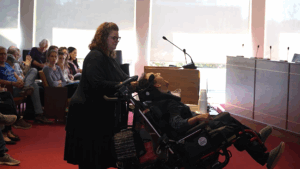
Wendy Lincicome has been Meek’s caregiver for 31 years and lived with him for the past 18 years. Although North Carolina Governor Josh Stein announced that he is canceling reimbursement rate cuts for providers that care for Medicaid patients, the impacts were still felt across the health care system.
“Cutting the Medicaid reimbursement rates puts our whole support system for Sloan at risk,” Lincicome said. Her pay would have been cut by 3 percent starting January 2026, and she’s already using much of her own income to support Sloan’s needs.
“Our rent and cost for medical supplies and medications not covered by his Medicaid are $400 more each month than what they were five years ago. That does not include increased food costs or the annual increase in cost for my own health insurance,” she said. Lincicome worried that she soon wouldn’t be able to afford to take care of Meek and would have been forced to lay off their support team.
A Health System in Peril
Sloan Meek’s experience is a window into the wider crisis affecting our state as lawmakers continue to delay the state budget. Providers quickly noticed the consequences when Medicaid provider reimbursement rates were cut by 3 to 10% in October.
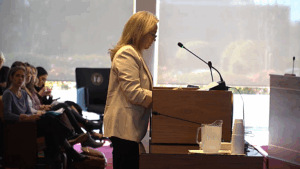
The repercussions to our health system have been devastating, explained April Cook, CEO of the North Carolina Association of Free and Charitable Clinics, a network that serves uninsured and underinsured patients statewide.
“When reimbursement rates drop below the cost of delivering care, providers face impossible choices to reduce services, cut staff and programming, or close their doors,” Cook stated at the November 19 public hearing.
Free and charitable clinics provide dental, behavioral health, and pharmacy programs, and those are the programs and positions that were the most likely to be cut. Rural residents, families with low incomes, communities of color, and individuals living with chronic disease felt the greatest impacts but underinsured and insured alike were expected to endure the ripple effects.
“When you have constraints on the volume of providers that are actually taking Medicaid and subspecialists decreasing the ability to take it, hospitals are taking on more of these financial burdens and then that cost gets passed along to the rest of the insured patients,” Cook said.
“These consequences fall directly on patients, particularly children with special need therapies, individuals with disabilities, seniors in long-term care, pregnant mothers, and low-income adults,” April Cook, CEO of the North Carolina Association of Free and Charitable Clinics, added.
If lawmakers continue to delay a state budget and refuse to fully fund Medicaid, Cook believes North Carolinians will see poorer health outcomes, which will have a detrimental effect on the state’s workforce. “If you don’t have access to health care, a lot of people with chronic disease are just going to get sicker,” she explained.
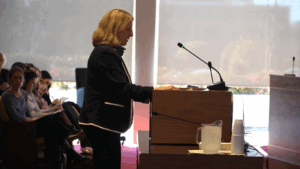
Dr. Beth Campbell, the medical director at the Open North Clinic at Urban Ministries of Wake County, said the nonprofit is struggling financially without state support. The clinic has had to reduce staff, forcing them to limit the number of patients they serve and decrease the amount of food they can provide through their food pantry.
Barkley Sample, Regional Director of Catholic Charities of the Diocese of Raleigh, said the organization is facing similar financial constraints, and is now relying on its reserves.
“There’s a reason why we have reserves, but it’s a rainy-day fund and it’s a rainy day right now,” Sample said.
These stories highlight the challenges communities across the state are facing. The NC Justice Center calls for the North Carolina General Assembly to pass a budget that prioritizes health care and provides support for essential services.