 One time Donation
 Events
 Recurring Gift
 Employer Gift Matching
 Stocks & DAF
 Endowment
 Justice Circle
 La versión en español aparece después del texto en inglés
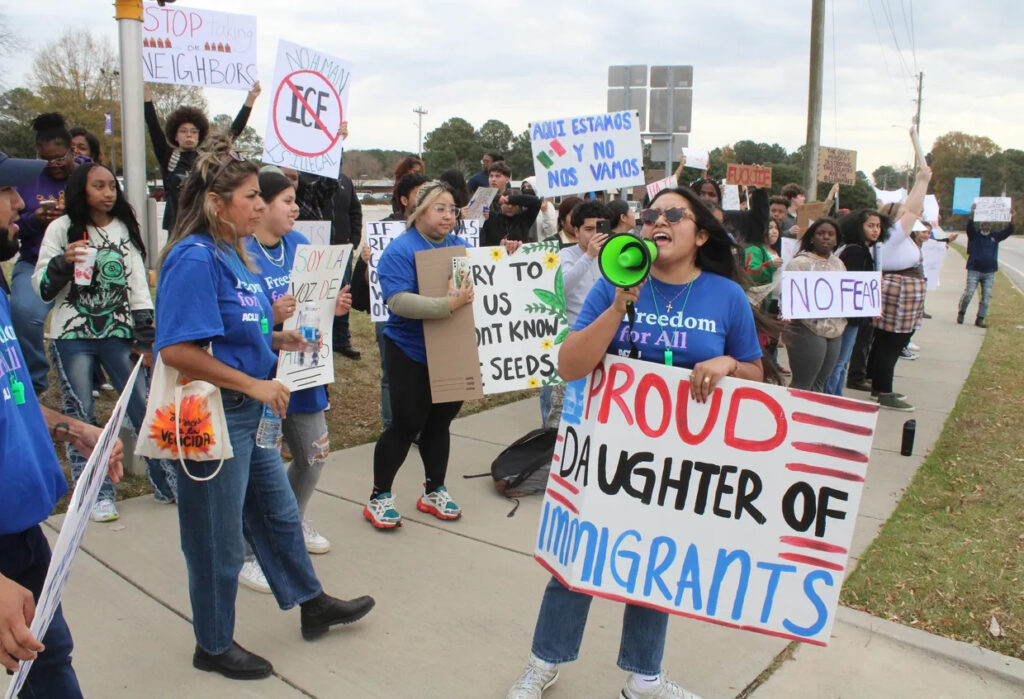
(Raleigh, NC – December 12, 2025) For many advocates across North Carolina, this year, and especially these last few weeks, has been emotionally shattering. ICE raids have returned to communities that have already lived through a decade of fear. Families are once again creating emergency plans for the worst-case scenario. Communities are canceling medical appointments, skipping work, and not taking their children to school. The fear is loud. And the silence is even louder.
As the daughter of immigrants, the scapegoating we are witnessing is not new. History is repeating itself, again, and the familiar narrative has returned: blame immigrants for every systemic failure in this country. I have spent these weeks supporting families who remind me so much of my own, and the weight of memory sits heavy. I know too well what it means to live in the shadows. To move in silence. To hope that if you stand still enough, maybe the world won’t notice you.
My own family’s journey is a reminder of how fragile safety can be. Under the previous Trump administration, my mother lived undocumented in rural North Carolina, and every knock at the door felt like a threat that could change our lives forever. Today, she is a U.S. citizen. That transformation should feel like a triumph. But the truth is, even citizenship does not erase the trauma, exhaustion, and vigilance that immigrant families carry. Right now, the fear persists for one painful, clear reason: it does not matter if you are a U.S. citizen. ICE has shown, repeatedly, that citizenship does not protect you from racial profiling. We’ve seen them target anyone with brown skin, arresting first and asking questions later.
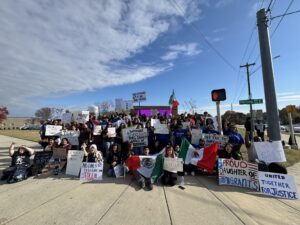
But, in the past three weeks, I have seen something extraordinary, something beautiful rising out of the chaos. The raids have awakened a sleeping giant. People who once felt untouched by policy decisions are realizing that no one is far beyond reach. From public education to Medicaid access to the rising cost of living, people across North Carolina are feeling the consequences of policy choices they were told would “restore order.” But instead of shrinking back, people, especially young people, are standing up.
What gives me hope?
It’s the walkouts spreading across the country. It’s the teenagers in Wilson County who are making protest signs on a Tuesday afternoon. It’s the look on their faces when they realize they are fighting for something bigger than themselves. As I watched them, one of them asked me, “Are you okay? You look uncomfortable.” And, at that moment, I understood why.
When I was their age, I held my first protest sign begging this country to see my undocumented mother as a human being. I begged for safety. For acceptance. For the right to exist in the only home I had ever known. I never imagined I would see young people, almost a decade later, fighting a different version of the same battle.
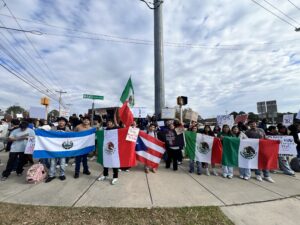
It was like watching a circle close, one I never wanted them to inherit. And yet… they are lifting their voices. They are demanding change. They are refusing to disappear.
Their courage gives me hope because they are not just protesting; they are organizing. They understand something powerful: real safety is not created by fear-based policies. It is built by community power. And across North Carolina, that power is growing.
From rural towns to urban centers, we are seeing neighbors step up to learn their rights, volunteers joining rapid response networks, families challenging unjust detentions, and local leaders pushing back on policies that make our communities less safe. We are also watching coalitions deepen between immigrant communities, Black-led organizations, educators, and faith leaders. These relationships, these bridges, are the true infrastructure of collective safety.
The work ahead is hard. The gaps exposed by the raids: legal support, language access, transportation, mutual aid, childcare, accurate information, crisis response, trauma-informed care, among many others require more resources, deeper coordination, and political courage from those in power. We need policies that invest in community well-being rather than criminalization: expanded funding for legal defense, true sanctuary policies at the local level, higher wages so people can afford the basics, stronger protections for tenants, and access to healthcare regardless of immigration status. These are not radical ideas. They are necessary ones.
But despite the uncertainty, I remain hopeful, not because things are easy, but because I’m watching the next generation rise with clarity and conviction.
They remind me of the fire I once carried before too many defeats dimmed it.
I see that same fire burning across North Carolina right now. In Wilson, where history is shifting as we elect our first Latine leader to public office. In rural towns, where local leaders are mobilizing to build the infrastructure their communities need, not just for this moment, but for the future they deserve. In the coalitions of solidarity forming across counties and cultures. In the families who refuse to disappear. And in the young people who refuse to inherit silence.
Hope lives there.
And as long as we keep building power, across communities, across languages, across counties, the shadows will never be able to swallow us again.
*************************************************************************************************************************************************
¿Qué te da esperanza?
Para muchos defensores de Carolina del Norte, este año, y especialmente estas últimas semanas, ha sido emocionalmente devastador. Las redadas de ICE han vuelto a comunidades que ya han vivido una década de miedo. Las familias están una vez más creando planes de emergencia para el peor escenario posible. Las comunidades están cancelando citas médicas, faltando al trabajo y no llevan a sus hijos al colegio. El miedo es fuerte. Y el silencio lo es aún más.
Como hija de inmigrantes, la búsqueda de chivos expiatorios que estamos presenciando no es nueva. La historia se repite, otra vez, y la narrativa familiar ha regresado: culpar a los inmigrantes por cada falla sistémica en este país. He pasado estas semanas apoyando a familias que me recuerdan tanto a la mía, y el peso de la memoria se siente profundo. Conozco demasiado bien lo que significa vivir en las sombras. Moverse en silencio. Esperar que si te quedas lo suficientemente quieta, tal vez el mundo no te note.
El camino de mi propia familia es un recordatorio de lo frágil que puede ser la seguridad. Bajo la administración anterior de Trump, mi mamá vivió indocumentada en la zona rural de Carolina del Norte, y cada golpe en la puerta se sentía como una amenaza que podía cambiar nuestras vidas para siempre. Hoy, ella es ciudadana estadounidense. Esa transformación debería sentirse como un triunfo. Pero la verdad es que ni siquiera la ciudadanía borra el trauma, el agotamiento y la vigilancia que arrastran las familias inmigrantes. Y ahora mismo, el miedo persiste por una razón dolorosa y clara: no importa si eres ciudadano estadounidense. ICE ha demostrado, repetidamente, que la ciudadanía no te protege del perfil racial. Hemos visto que se dirigen a cualquiera con piel morena, arrestando primero y haciendo preguntas después.
Pero, en las últimas tres semanas, he visto algo extraordinario, algo hermoso surgir del caos. Las redadas han despertado a un gigante dormido. Personas que antes se sentían fuera del alcance de las decisiones políticas se están dando cuenta de que nadie está lejos de alcanzar. Desde la educación pública hasta el acceso a Medicaid y el aumento del costo de vida, la gente en Carolina del Norte está sintiendo las consecuencias de políticas que se les dijo que “restaurarían el orden”. Pero en lugar de retroceder, las personas, especialmente los jóvenes, se están levantando.
¿Qué me da esperanza?
Son las huelgas de estudiantes que se extienden por todo el país. Son los adolescentes del condado de Wilson haciendo carteles de protesta un martes por la tarde. Es la expresión en sus caras cuando se dan cuenta de que están luchando por algo más grande que ellos mismos. Mientras los observaba, uno de ellos me preguntó: “¿Estás bien? Pareces incómodo.” Y, en ese momento, entendí por qué.
Cuando tenía su edad, levanté mi primer cartel de protesta suplicando que este país viera a mi madre indocumentada como un ser humano. Supliqué por seguridad. Por aceptación. Por el derecho a existir en el único hogar que había conocido. Nunca imaginé que vería a jóvenes, casi una década después, luchando contra una versión diferente de la misma batalla.
Fue como ver cerrarse un círculo, uno que nunca quise que heredaran. Y aun así… están alzando sus voces. Están exigiendo cambio. Están negándose a desaparecer.
Su valentía me da esperanza porque no solo están protestando; están organizando. Comprenden algo poderoso: la verdadera seguridad no se crea con políticas basadas en el miedo. Se construye con poder comunitario. Y en toda Carolina del Norte, ese poder está creciendo.
Desde pueblos rurales hasta centros urbanos, estamos viendo a vecinos que se activan para conocer sus derechos, voluntarios que se unen a redes de respuesta rápida, familias que cuestionan detenciones injustas y líderes locales rechazar políticas que hacen que nuestras comunidades sean menos seguras. También estamos viendo cómo se profundizan las coaliciones entre comunidades inmigrantes, organizaciones lideradas por personas negras, educadores y líderes religiosos. Estas relaciones, estos puentes, son la verdadera infraestructura de la seguridad colectiva.
El trabajo que viene es difícil. Los vacíos expuestos por las redadas: apoyo legal, acceso al idioma, transporte, ayuda mutua, cuidado infantil, información precisa, respuesta a crisis, atención informada sobre trauma, entre muchas otras, requieren más recursos, una coordinación más profunda y valentía política de quienes tienen poder. Necesitamos políticas que inviertan en el bienestar comunitario en lugar de en la criminalización: ampliación de la financiación para la defensa legal, verdaderas políticas de santuario a nivel local, salarios más altos para que la gente pueda permitirse lo básico, mayores protecciones para los inquilinos y acceso a la atención sanitaria independientemente del estatus migratorio. Estas no son ideas radicales. Son necesarias.
Pero a pesar de la incertidumbre, sigo teniendo esperanza, no porque las cosas sean fáciles, sino porque estoy viendo a la próxima generación levantarse con claridad y convicción.
Me recuerdan el fuego que yo misma llevaba antes de que demasiadas derrotas lo apagaran.
Veo ese mismo fuego ardiendo en Carolina del Norte ahora mismo. En Wilson, donde la historia está cambiando mientras elegimos a nuestra primer líder latine para un cargo público. En pueblos rurales, donde líderes locales se están movilizando para construir la infraestructura que sus comunidades necesitan, no solo para este momento, sino para el futuro que merecen. En las coaliciones de solidaridad que se están formando entre condados y culturas. En las familias que se niegan a desaparecer. Y en los jóvenes que se niegan a heredar el silencio.
Ahí vive la esperanza.
Y mientras sigamos construyendo poder, entre comunidades, entre idiomas, entre condados, las sombras nunca podrán tragarnos de nuevo.